
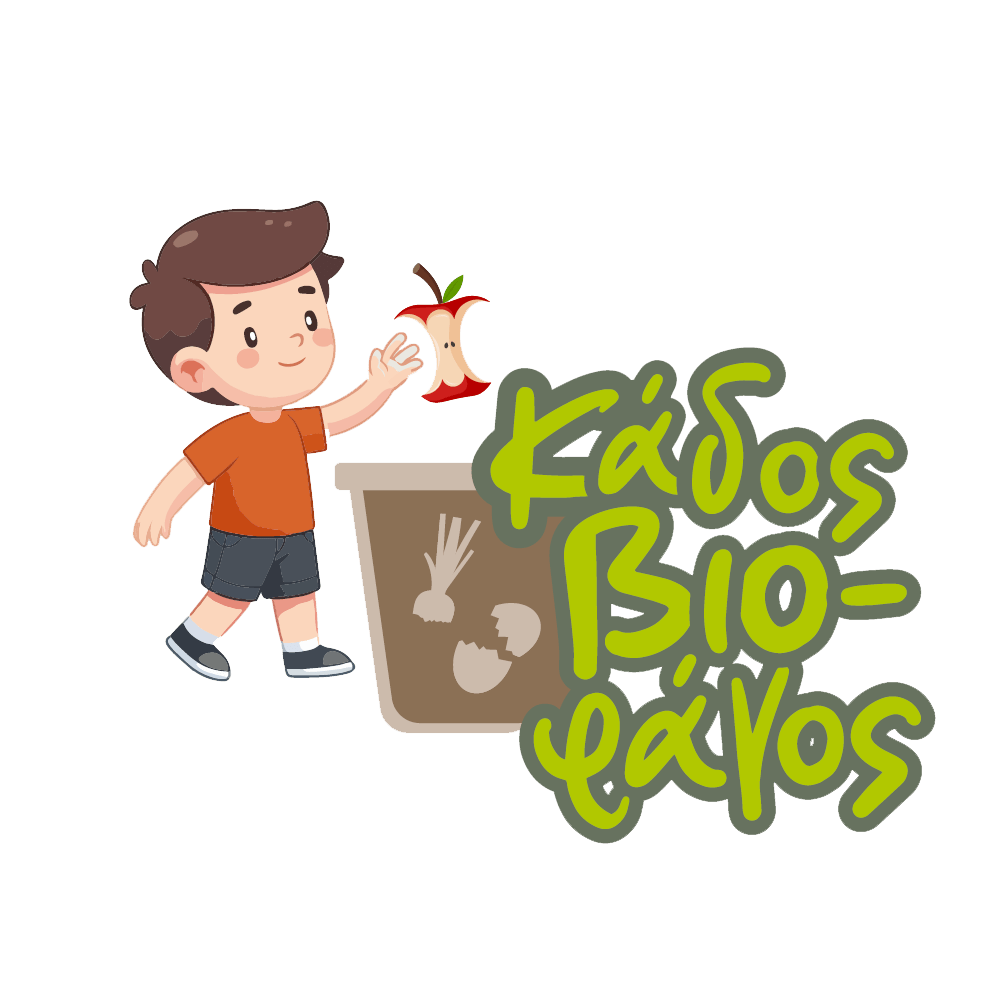
The project “Kados Viofagos – Participatory Action of Students and School Units for the Recycling and Management of Bio-waste – ΚΠΔ24-77” aims to promote sustainable waste management through the active involvement of municipal childcare centres of the Municipality of Dion–Olympos. Focusing on primary education units that have on-site kitchens and provide meals to children, the project foresees the installation of dedicated bio-waste collection bins, facilitating source separation. In parallel, educational programmes will be implemented for students and teachers, emphasizing the importance of recycling and composting. Through experiential workshops and awareness-raising activities, students will acquire practical knowledge on waste reduction and environmental protection. Their active participation is expected to act as a catalyst for the dissemination of good practices within the wider community, strengthening environmental awareness and supporting the transition towards a circular economy. The project aligns with the objectives of the National Waste Management Plan, promoting the separate collection and recovery of bio-waste. Read more.

CLIMAware is a cross-sectoral initiative aimed at combating climate misinformation and disinformation by enhancing media literacy, fostering critical thinking, and equipping diverse target groups, including citizens, educators, journalists, and policymakers along with disadvantaged and marginalized groups, and individuals with low or no educational background, with innovative tools, training, and resources. The project relies on strong methodological background of climate science, citizen science, gamification, and storytelling, providing a scientifically robust and engaging approach to counter misinformation, including AI-generated fakes. CLIMAware operates through a structured work plan spanning five phases. It begins with research-driven activities, including a cross-national survey mapping public misconceptions on climate change and a scientific literature review to debunk misinformation patterns. Findings are validated by an international network of climate experts and inform the development of the CLIMAware ToolBox, an interactive, multilingual, gamified media literacy resource, and the Climate Change FactSheets, visually engaging materials designed in collaboration with artists to communicate complex climate data accessibly. These tools are tested through participatory citizen science workshops across diverse geographical and social contexts, including rural, urban, academic, and war-affected settings. CLIMAware promotes engagement through hands-on fact-checking, misinformation detection exercises, and artistic exhibitions, fostering media literacy among broad audiences. The project ensures long-term impact through a strategic dissemination plan, including a European-level awareness campaign, high-level policy discussions, and the development of sustainability strategies to embed project resources into educational curricula and media literacy networks.
CAPaware (GA-101254019) aims to empower EU citizens—particularly rural youth, farmers, educators, and local policymakers—to actively engage in shaping the future of the Common Agricultural Policy (CAP) through innovative, participatory, and inclusive formats. Addressing gaps in CAP awareness, civic participation, and stakeholder dialogue, the project supports the CERV-2025-CITIZENS-CIV Priority 1 by fostering bottom-up democratic engagement on Union policy priorities. The project will implement a transnational methodology across Greece and Italy, including baseline and needs assessments, multi-channel communication campaigns, storytelling, public debates, educational integration, and cross-border study visits. CAPaware will enhance policy literacy and build trust in EU institutions by translating complex CAP objectives—such as sustainability, food security, and rural development—into accessible, relatable narratives and participatory activities. Special attention is given to gender equality, inclusion, and youth empowerment. The project outputs include citizen-driven policy recommendations, accessible educational materials, and multimedia content, ensuring both immediate impact and long-term sustainability through institutional, educational, and digital legacy.
 cbiohub.gr